||
Shrimadanand Teertha Gurubhyonamha ||
Introduction
to Shri 1008 Shrimadananda Teertharu :
 |
| Born |
|
| Birth Place |
Pajaka |
| Tithi |
Vijaya Dashami |
| Preceptor |
Shri Achutapreskhacharyaru |
| Pitadhipathi |
Uttaradi Math |
| Aradhane |
Magha Shudha
Navami |
| Amsha |
Vayu |
| Poorvasharama |
Vasudeva |
| Name |
Madhvacharya, Ananda Tirtha, Purna Pragnya |
| Father's Name |
Madhyageha
Bhatta |
| Mother's
Name |
Vedavathi |
|
||
Shri Gurubhyonamaha ||
|| Shri Hari Om ||
THE BIRTH
OF VASUDEVA
SUBSEQUENT
SAMSKARAS AND MEETING THE BRAHMARAKSASA IN THE FOREST
THE LORD
ESCORTS VASUDEVA
VIDYA
RAMBHA SAMSKARA
THE DEFEAT
OF THE PURANICA (LEARNED RECITER OF THE PURANAS)
UPANAYANA
(SACRED THREAD)
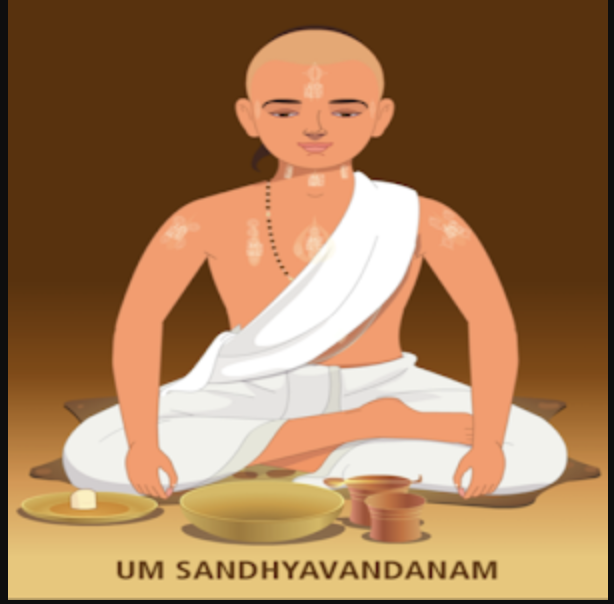
SANDHYA
VANDANAM
SNAKE
DEMON VANQUISHED
EDUCATION
SANNYASA
THE DATE
OF SANNYASA
PURNAPRAJNA TIRTHA —THE NEW SANNYASIN
THE GANGES
(TWO STORIES)
PANDIT
VASUDEVA DEFEATED
PURNAPRAJNA - THE ALL KNOWING SAINT
CONCLUSION
BACKGROUND
Sri Madhvacharya was born to Madhyageha Bhatta and Vedavati in a small village called Pajaka near Udipi. Madhyageha Bhatta belonged to the Shivalli sect of Brahmins. The Shivalli
or Shivabelli sect of Brahmins are mostly found around the Udupi area, Shivabelli
being an old name for Udupi in connection with Shri Candramuleswaraji. Previous
to the advent of Madhva some Shivalli Brahmins worshipped Lord Siva, but most
had an affiliation with the Bhagavat sampradaya and had a leaning towards Visnu.
Most would worship that form of a lingam, but would see Visnu as his origin.
Madhyageha,
although a young man, had a wealth of understanding of the Vedas. Throughout
his schooling he had the reputation as a devotee scholar, not merely interested
in Brahman; his object was Parambrahman, the Supreme Personality of Godhead
Narayana. After some time "Madhyageha Bhatta", as he became known,
was married to a pure and devout lover of Lord Visnu by the name of Vedavati.
Madhyageha Bhatta was always very eager to hear the pastimes of the many incarnations
of Lord Visnu, and render devotional service to the Deity of Anantasana in Udupi.
Madhygeha spoke to his chaste wife about bringing into this world a pure son,
one worthy of being called putra (one who saves his parents from hell).
Madhyageha
Bhatta and his wife decided to approach their Ista Deva (family Deity) Lord
Narayana and make a vow. They then served Lord Ananrasana in Udupi for twelve
years with pure minds and devotion, free from lust and greed. With their austerity
they performed various austerities like the Payovrata etc, observing the same vows
as Aditi and Kasyapa who were impelled by Lord Brahma to undergo this penance
to obtain Lord Vamana as their son. At the end of this time they decided
to perform the Garbhadana samskara, after taking the Lord's blessings. Madhyageha
purified his body with pancagavya prasana, offered arghyas, flowers and lamps
to the Lord, and they stated their desire to bring into this world a pure
devotee to save everyone from further suffering.
After
the purificatory menstrual period, choosing the male star (Nakshatra) and
the suitable day for conception according to the proper vara (day) tithi (time)
and nakshatra (asterism) they invoked the blessings of Lord Narayana. They
then united by the principles of religious sex and by the Lord's grace, Vedavati
conceived a child.
In the
Madhva Vijaya (2.25) it is described that the incarnation of Lord Vayudeva
(Mukhyaprana) entered the body of the wife of that pure Vaisnava Brahmin,
entered into the womb of Vedavati. On this point though, Madhva Vijaya suggests
that Mukhyaprana evicted the soul born of the conception of Madhyageha and
Vedavati, and thus expelling that child, Vayu appeared of his own will and
placed himself in that womb.
Because
Mukhyaprana's incarnation was situated in Vedavati's womb, she became incredibly
effulgent and was decorated with all thirty two auspicious qualities. Madhva
Vijaya describes her body as being like the temple of Lord Visnu, the Supreme
Lord because of her pure devotion.
The pumsavana
samskara was performed at three months pregnancy and then simmontanayana (swadabhaksana)
feeding the child in the womb, parting the hair, etc. purificatory rites were
performed at seven months. The fire sacrifices for the safe delivery of the
child were performed according to Brahminical rites.Madhyageha Bhatta called
for learned Vedic astrologers to come, and together they performed the jatakarma
(birth ceremony) by offering all nice things to the child and bathed him in
panca gavya (cow dung, cow urine, ghee, milk and yogurt) and pancamrta (ghee,
milk, yogurt, honey and sugar water). They also put gold and ghee on his tongue
to invoke good health and intelligence, tulasi to invoke devotion to the Lord,
and honey to invoke good appetite. Then the learned astrologers made a chart
to see what kind of son had been born. They were amazed as all thirty two
auspicious signs were there in his person and the chart said that this boy
is none other than the scheduled avatar of Vayudeva. His purpose for coming
was that of reform, to change the ways of misguided men and to firmly establish
the personal philosophy of Lord Visnu. He would be a great acarya as previously
he had been Hanuman and Bhimasena respectively.
THE BIRTH
OF VASUDEVA 
At the
time of his birth, Madhyageha Bhatta's family was ecstatic and the whole Brahmin
community came to celebrate. Madhyageha Bhatta worshipped his ista-deva with
gratitude and then came to see the child. Upon seeing the bright moonlike
face of the newborn child, Madhyageha kissed his new son's head and gave him
the name Vasudeva. Mudillaya, a Brahmin friend of Madhyageha Bhatta gave a
milking cow and calf to the child, for he said that after twelve years of
devotion, the Lord of the cows, Govinda, gave Madhyageha a pure devotee son.
Everyone looked on the face of Vasudeva.
SUBSEQUENT
SAMSKARAS AND MEETING THE BRAHMARAKSASA IN THE FOREST
After the usual resting period for the mother in a Brahmin family, the niskraman
samskara was then performed. They couple went to the Anantasana temple in
Udupi to show their gratitude to the Lord.
Everyone
who saw him was astonished to see such a bright and lively baby. His size
for his age was already huge. He drank breast milk, as much and more than
his mother could possibly supply. Growing and growing, he was always hungry.
His mother had to give him milk every half an hour, and still he was hungry.
Madhva
Vijaya (2.43) describes how young Vasudeva would speak beautifully in indistinct
words playing the part of a small baby, infatuating everyone. His rocking
movements, learning to crawl, then standing on his own and gradually walking
were very pleasing to the devotees. Just as the childhood pastimes of Lord
Krsna captured everyone's hearts, so all these childhood pastimes of the avatar
of Vayudeva were very enchanting.
THE LORD
ESCORTS VASUDEVA
When Vasudeva was about three years old, his parents, took Vasudeva to a family
function at nearby Nediyoora village where Vasudeva's mother's family lived.
It was a huge festival with hundreds of relatives and their children.
Taking
full advantage of the bustle and general confusion of the whole assembly,
Vasudeva decided to go to the temple. The Supreme Lord Narayan, knowing that
His devotee didn't want to stay in such a mundane gathering, personally came
to take Vasudeva on a tour. Persons that Vasudeva met on the narrow path leading
south to Kanana Devata at Kudavoor asked him, "Child, where do you wish
to go?" but Vasudeva replied only with a pleasing smile from his moonlike
face. This is a walk of a mile or two to visit the temple of Lord rama. Vasudeva
entered the pagoda and went into the inner sanctum and offered his respects
there, and then he went to the temple of Talakude (Bannaje) and offered respects
to Lord Hari residing within the Siva Linga there. After taking darsan at
these sacred tirthas and overjoyed by the sight of the Lord Who has a lotus
navel, Lord Visnu, Vasudeva headed for Udupi.
In Udupi,
Vasudeva first visited the Candramoolesvara temple of Lord Siva and offered
his respects before going to Lord Ananteswara. There he stayed for some time,
offering prayers and respectful obeisance’s.
By this
time, back at the festivities, Madhyageha Bhatta had noticed that for some
time now he had not seen his son. He asked his wife if she had seen him, and
when she told him she hadn't either, in desperation they combed the whole
area looking for their son. News spread from people to people that the darling
of Pajakasetra had gone missing and now night was about to fall. Alone out
there somewhere, with no-one to protect him; what would the poor boy do? Asking
everyone in the vicinity if they had seen the boy, they found that he had
headed south. Practically the feasting and partying stopped at the family
function as everyone was looking for little "helpless" Vasudeva.
Madhyageha Bhatta, going from temple to temple, finally found Vasudeva absorbed,
looking at Lord Anantasana. Tears of joy flowed from Madhyageha's eyes at
having found Vasudeva.
Vasudeva
beaming, was not even thinking he had done wrong or put anyone into a state
of intense anxiety as he had. He now stood before his father who asked, "Vasudeva,
how did you come so far on your own on this difficult path through the forest
and lanes? I can't understand how?" Cheerfully the young boy replied
that, "Lord Narayana escorted me to Bannajee, then Lord Hari escorted
me to the eastern direction and on to Udupi. I then offered my respects to
Lord Anantasana in the western direction and He brought me here to His temple,
so I wasn't alone, father." Saying this, the child shone like a gem in
the assembly of caring relatives and friends who were all wonderstruck.
VIDYA
RAMBHA SAMSKARA
As Vasudeva grew, day by day he showed signs that he was incredibly intelligent,
grasping anything that required study almost immediately, so Madhyageha Bhatta
thought it time to perform the Vidya Rambha (also known as Hate Khadi and
Akshar Abhyasam) - his beginning of primary education - samskara, even though
a year or two early. Madhyageha Bhatta saw that teaching Vasudeva the alphabet
and showing him how to form the letters with the sounds was so natural and
easy for the boy to pick up, it was as though he already knew everything but
was just keeping it a secret. Traditionally this is a very big event in a
child's life, and many relatives, friends and well-wishers come to give presents
and blessings to the young boy. The Brahmins chanted mantra suktas, and swastivacan
to invoke the blessings of the Lord upon the boy who was clean shaven, bathed
and dressed in new cloth. When everyone saw the way Vasudeva mastered the
subject being taught in the first few minutes of his primary education on
his first day they were astonished. Then Vasudeva asked his father, "Oh
father, why do I have to repeat the same group of letters again and again?
This I already know." As soon as his father showed him something, that
was it - what next?
With
no effort one could easily see that the goddess of learning, Bharati Devi,
Sarasvati, was in her natural position, standing with folded hands offering
her respects to the great devotee of Lord Narayana, Lord Vayu, in his plenary
portion as Vasudeva-Mukhyaprana.
THE DEFEAT
OF THE PURANICA (LEARNED RECITER OF THE PURANAS)
A short time later was good proof as to how much this "small boy"
was learned. One day Vedavati took her son to a religious festival at nearby
Neyampalli. As in religious festivals, there were rituals, pujas, yajnas,
dramas, and in this one, a wedding also. Madhyageha Bhatta didn't go to this
festival, so while Vedavati attended the wedding ceremony, her son Vasudeva
slipped off to hear the recitals and stories from the Puranas told by the
renouned Puranic narrator of the name Siva Madinya (Madikullaya). This Puranica
was famous for reading to very large audiences, and as the narrator narrated
a story from the Puranas, suddenly Vasudeva jumped up and accused the narrator,
"The story that you are telling does not confrom with the purports of
the great saintly rsisi and munis like Vyasadeva and Sukadeva. Therefore what
you are saying is highly speculative and cannot be taken as authoritative."
Looking around, to the astonishment of the listeners, these words were coming
from the mouth of a small four year old boy. On the prompting of all the persons
in the assembly, Vasudeva told the proper account of the story that was polluted
by the narrator, giving the correct meaning and completely defeating the bogus
speculations of the "narrator". Flowers poured from the sky as the
demigods honored the boy, and all the assembly also glorified and praised
the learning of the small boy, Vasudeva. Then the assembly broke up and all
went their separate ways, leaving the narrator alone. Vasudeva returned to
his mother and they both went back to Pajakaksetra where he asked his father,
"Who is correct? Is it the narrator Siva or me who has speculated on
the sastra?" Madhyageha Bhatta told his son that he was correct, after
hearing what both had said. Madhyageha Bhatta thought to himself that the
reason for his son's wonderfully sharp intelligence was due to the mercy of
Lord Anantasana, and in that way Madhyageha Bhatta always remembered his Lord
Anantaswara.
UPANAYANA
(SACRED THREAD)
Generally young boys take upanayana at around eight years, but Madhyageha
Bhatta, seeing his son's life of spiritual enlightenment, arranged for the
ceremony to be performed when Vasudeva was just five years old. For Madhyageha
Bhatta and Vasudeva both, this is a marked change is their lives, especially
for Vasudeva, for now he had formally taken to brahmacarya training and an
acceptance that now childhood was over and that this was a time for Vedic
study, spiritual pursuits, initiation into chanting of sacred mantras, worship
of Surya-Narayana at the junctions of morning, noon and night (sandhyavandhanam),
and always wearing the sacred thread of the Brahmin. In fact, this time of
life for one who accepts upanayana, is considered one's second birth.
Madhyageha
Bhatta showed his pure and simple son how to light to homa and how to perform
the oblations into the fire after cleansing oneself internally by mantra,
and externally by bathing, wearing clean cloth, the sipping of water called
acaman, and performance of nyasa (touching parts of the body with mantras).
Before beginning this Madhyageha Bhatta contacted learned Brahmanas to find
the proper date as to when this ceremony should be performed. His astrologers
had selected Vrsabha Lagna, the bull for steadiness.
According
to astrological texts, the Vrsabha Lagna is considered a great asset to one's
determination for completing a task, so in the matter of upanayana, or receiving
the sacred triple thread of the brahmacari, Vrsabha or Taurus, aids determination,
sensual control, and the undertaking of heavy loads such as study and celibacy.
This lagna is said also to be very auspicious as Lord Shri Krsna was born with
this lagna.
The fabulous
ceremony that followed, the guru (in this case his father, Madhyageha Bhatta)
sat down before the sacred fire and handed his wonderful son his karam chappals
(padukas - peg shoes) and rod of the brahmacari, and new yellow cloth. Oblations
were offered into the fire amidst the joyous crowd of onlookers, but in private
the triple cord (sacred thread) was placed on Vasudeva's body and the Gayatri
mantra was whispered into the right ear. After the shaving of his head and
having the ritualistic bath, he put on yellow cloth, and the mekala kusa grass
belt was then placed around the boy's waist. He was shown how to sip water
before eating or performing any kind of worship, and also shown how to perform
prana ahuti's (om pranaya swaha, om apanaya swaha, om vyanaya swaha, om udanaya
swaha, om samanaya swaha) before taking his meals.
This
was so natural for him to learn, but made him more hungry just chanting the
mantras, as his digestive airs began to work. As a formality one is explained
the meanings behind brahmacari life, then there is also acceptance of vows
of celibacy, simplicity, and study of the Vedas. Everyone who saw young Vasudeva
in his pure beauty accepting his sacred thread were so fascinated by his features
that they could not take their eyes off him. The demigods and their wives
also came in invisible forms, and enjoying the festive scene, glorified Vasudeva
on this all-auspicious day. The sound of kettle drums was heard from above,
and showers of flowers and flower petals rained from the sky.
SANDHYA
VANDANAM
Vasudeva then learned from his father how to perfrom sacred sandhya vandanam.
"Sandhya" means at the conjunctions and "vandanam" means
prayers.
SNAKE
DEMON VANQUISHED
Just
after Vasudeva returned back to Pajakaksetra after his upanayana, Vasudeva
encountered a huge five-headed snake demon. Many believed this snake to be
the demon Maniman who was killed by Bhima during the Mahabharata war. They
say that he was so envious of Bhima that he took his birth in the woods near
Pajakaksetra just to try to kill the young Vasudeva who, in his second incarnation
of Vayu, was Bhimasena.
Once
Vasudeva and his friends were in the area of the Durga Vimana as usual, just
nearby Pajakaksetra, when Vasudeva passed by the place where the snake demon
Maniman dwelt near the thickets and bushes. As he passed by, the snake demon
pounced and attacked Vasudeva with his sharp and poisoned fangs. The local
people, upon hearing that Vasudeva had been bitten by this deadly creature,
were on the verge of fainting.
As everyone
knows, when a small boy or five or six gets bitten by a snake, he needs immediate
medical attention in order to survive the poisonous venom inflicted into his
system. However, this small boy Vasudeva was attacked by a huge monster of
a snake with five heads. The attack was unpredicted, fierce and quick, but
Vasudeva, keeping a cool head, vanquished that snake demon with the big toe
of his powerful little foot. Looking at the place of the bit that was inflicted
by Maniman, there was no wound to be seen. Further more, Vasudeva was not
affected by this incident in any way.
Madhya
Vijaya (3.41) describes that this Vasudeva, who has accepted the form of a
small boy, is only a semblance of such. Definitely he is that Mukhyaprana
who was sent to earth at the request of all the demigods including Lord Brahma,
Lord Siva, Lord Indra, Lord Candra and Brihaspati.
To this
day one can visit the place where this incident happened. Between Vimangiri
and Pajakaksetra a small shrine has been erected around an impression of the
snake demons hoods pressed into the solid rock, his head being turned into
a paste.
EDUCATION
Being satisfied to know where Vasudeva was at any given time was always the
prime concern to Madhyageha Bhatta and his chaste wife Vedavati. Knowing that
now in the association of all the other young Dwijas (Brahmin boys), Vasudeva
was now studying at the place of Totanithillaya, who was the school master
for all the Brahmin boys of the srea. Even in school Vasudeva was always a
leader. Where he went all the other boys went. He was always several steps
ahead in his play, wrestling, studies, everything. Madhva Vijay (3.44) says,
"This incarnation of Lord Vayudeva is more swift than the mind having
controlled his mind. No-one can compare with him."
In his wrestling he would take on and beat bigger boys and on many occasions
he would challenge many bigger boys. His "nick" name at school was
"Bhima", his iron vice-like grip of his strong arms and hands could
only be released when he wanted to release and not otherwise, and the weight
he could lift or carry effortlessly could only compare to Hanuman and indeed
this is actually who, in another age, Vayu assumed. In Madhva Vijay is says
that Vasudeva, with a gently smiling face, easily defeated everyone. His friends,
associates, and peers would sometimes, after being defeated by Vasudeva in
water sports, splash water at him out of rivalry, making his luster and reddish
eyes appear even more beautiful.
Vasudeva's
Brahmin teacher (Pujavan), who was born in the Brahmin family of Totantillaya,
could not relate to Vasudeva's brilliance at all. At every opportunity Vasudeva
would run home for more food to eat, and then slowly return to school, avoiding
his study. On one such occasion Totantillacaya Brahmin, very angry, accused
Vasudeva of not being very attentive to his study either during class or whilst
avoiding class, or in his after class homework. "Why do you, Vasudeva,
not study with your school friends? You act as though indifferent to study?"
Vasudeva replied that he didn't see the point in repeating that which he had
already learnt, and besides, "I'm completely up to date with my studies."
Totantillaya was furious at the boldness of the boy's statements and told
him to repeat the sloka verses that they had studied that day. Vasudeva not
only repeated verbatim the day's slokas, but all the following slokas that
they had not studied yet in school.
Totantillaya
was shocked. His recitation of the sastras complied with all the rules for
chanting mantras and put his teacher into a spin. How could it be? Impossible,
he thought. His recitation of the sastra complied with all the rules of jata,
pada and krama meters for chanting mantras. Not only did he know all these
verses but he also pronounced them with such clarity and perfect pronunciation
it had caused the demigods to appear in the sky to hear. Who was this boy?
After many such incidents of Vasudeva showing some of his nature, he was given
the title at school "Anumana Tirtha", for his ability to always
find the perfect verse to explain any given circumstance and also elaborate
on that point, giving his purport for clarifying the instance.
In Madhva
Vijay (3.54-55) there is a mention of Mahaitareyopanisad which clearly propounds
the greatness of Lord Visnu. Madhva Vijay also says how the devotee of Lord
Visnu, Vasudeva, having once heard this great Aitareyopanisad understood it's
many hymns within a second. This Upanisad became his lifelong favorite. Even
it is recorded that at this young age when Totantillaya started to explain
this Upanisad, Vasudeva stopped him and gave a more clear explanation to which
Totantillaya was immensely pleased. By now he was beginning to realize how
fortunate he was of having such an incredible pupil in his school. It wasn't
however until graduation day that the bond was duly sealed. Vasudeva gave
as his guru daksina (remunerations in the form of a preceptor fees) to Totantillaya
love of God - Krsna bhakti. Taking permission to leave gurukula, Vasudeva,
knowing his mission and how to fulfill Lord Visnu and all the demigod's desires,
prepared himself to propagate the understanding of the personal form of the
Lord and try to induce a taste within the soft hearts of the Vaisnavas to
develop and appreciate love of God, and to philosophically smash those opposed
to the personal form of the Lord. The guru Totantillaya, with tears of love
brimming in his eyes, bade his pride and joy, his very best of students Vasudeva,
a fond goodbye.
SANNYASA
After graduating from gurukula, Vasudeva's only thought was how to give the
innocent people the most substantial gift of which was the cause of his descent;
to give everyone a sound philosophy which solely glorified the Supreme Personality
of Godhead, Lord Narayana-Visnu. Only by giving these struggling devotees
this priceless gift could anyone really satisfy their needs. Vasudeva saw
that the only way to do this wholeheartedly was to take the renounced order
of sannyasa under the guidance of an ascetic of good repute coming in a bona-fide
line. However Madhyageha Bhatta was already looking around for a nice Vaisnava-Brahmin
girl as a suitable match for his son. Vasudeva had no interest in society,
friendship and love of this material world, not any desire to become a regulated
householder follower of the varnasrama system.
His sole
thought was preaching, so needless to say, Vasudeva had heard of one old ascetic
of Bandarkare village just a few miles north of Udupi. This old sannyasi was
reputed to be of the old Bhagavat sampradaya. This Acyutapreksa, whose name
means "one who has knowledge of the infallible Lord Acyuta", according
to Shri Madhva Vijay (4.7) he was in an earlier birth a bumble bee who used
to reside in the house of the Pandavas for some years and used to take prasadam
directly from the hands of Queen Draupadi. Nonetheless it was for his asrama,
for he possessed a pure mind and pure heart, and this was where Vasudeva was
heading.
Due to
there being a four hundred year gap in the Brahma sampradaya, breaking for
all practical vision with Prajna, some ten guru-disciple generations previous,
the gurus in this line up until Acyutaprajna (Acyutapreksa) had, out of fear
of the wicked Buddhists and Mayavadins, hidden themselves away and just tried
to maintain their line without drawing attention to themselves. These Kutirchak
sannyasis were not strong enough to smash the onslaughts of these philosophies,
so they just stayed in their asramas at the edge of their villages and tried
to philosophically maintain themselves.
At the
same time however, Madhyageha Bhatta, hearing that his one and only son was
spending much time with the old sannyasi Acyutapreksa, became worried. He
approached Vasudeva who was the only source of life of both he and Vasudeva's
loyal, devoted mother, Vedavati. As Madhyageha approached Vasudeva, vasudeva
came right out with it. "I want to take sannyasa. Please give me your
permission."
Madhyageha
Bhatta asked Vasudeva to reconsider, after all, they were old and frail and
his mother couldn't stand the separation. He asked him to wait until they
passed away, until Vasudeva was older, and after householder life, in his
old age he could take to this excellent life of ascetics. In this way with
logic, entreaty and argument, Madhyageha Bhatta tried to dissuade his son
from taking to the renounced order and thus going away from his home. Even
Madhyageha Bhatta prostrated himself at the young boy's feet and begged him
on behalf of his mother not to take sannyasa, but Vasudeva only replied that,
"See, it is already confirmed. The Supreme Lord has given his permission
in the forms of omens, signs, etc., for a senior family member should never
prostrate himself before a junior unless that junior be in the renounced order
of life." Madhyageha Bhatta then begged the old sannyasi Acyutapreksa
not to initaite their son into the sannyasa order.
There
was no reply, and soon after Acyutapreksa headed south to Kuthyadi, now called
Kayooru, across the Netravati river which runs about 38 miles south of Udupi
with Vasudeva as his companion. It was here at Kuthyadi Mutt in the village
of Karem that Madhyageha Bhatta found his on in the process of accepting sannyassa
formally from Acyutapreksa. Vasudeva was in the process of tearing cloth into
two pieces, one to go around his waist and one to cover his genitals, known
as kaupin, or the traditional undergarments of the sannyasi.
Madhyageha
Bhatta tried desperately for the last time to stop his determined son. "Oh
son! Manu and other composers of the dharma sastra do not speak of any auspicious
deed other than the protection of the parents. Those two sons of ours are
dead. If you take to sannyasa we have no protector." Vasudeva then replied
to his father coolly and with detachment and love. "When a man becomes
detached he would take sannyasa at that time. This is well known in the Vedic
literatures. Thought I am without any attachment to objects, I do not take
sannyasa without fixing someone to serve both of you. (Another child will
be born, a son to look after you, then I can take sannyasa.) Madhyageha Bhatta
again tried to reply in a sympathetic way saying that, "From a sastric
point of view I can understand what you are saying and you are very courageous,
but what will your mother say. She is a simple soft-hearted woman ..."
Vasudeva to the point, interrupted his father, "Father, you give me permission
to take sannyasa now." and paid his prostrated obeisance's to his father.
Madhyageha Bhatta then said, "If your mother agrees then let it be so!"
Then Madhyageha Bhatta returned to his home on the promise that until his
mother gave permission, he would not take sannyasa.
Soon
after, by the will of Vasudeva, his mother Vedavati became pregnant. This
pacified the parents of Vasudeva somewhat, though Madhyageha was still adamant
as Darasatha was for Rama when at a tender age Rama was banished to the forest.
Cheerfully Vasudeva came to Pajakaksetra and to his parents house. "Mother,
if you ever want to see me again, please give me permission to take sannyasa.
Otherwise, I will leave this area altogether, and I will not be seen by you
even once." Naturally, any mother who felt anything for her child would
be forced by such words to agree. Vedavati, distressed, gave her beloved son
his desire to take sannyasa, for the thought of never seeing him again was
worse than death. Vasudeva stayed around, coming and going from the family
home to Acyutaprajna's asrama until finally a boy was born to Vedavati and
her husband. Upon the birth of the new son, Vasudeva returned home and in
agreement with the previous arrangement in the form of silent acceptance,
Vedavati, the new mother, gave her permission.
THE DATE
OF SANNYASA
Most madhvas accept that it was around 10 or 11 when Vasudeva took sannyasa.
Padmanabhacar points out that assuming that the incident of the Ganges coming
to Sarovar (lake) in Udupi at the request of Vasudeva being recorded in the
year 1209 when astrologically Jupiter was in Leo to be correct, then Vasudeva
was in his tenth year, nine years having been fully passed.
There
are others also that say Vasudeva's sannyasa took place on the Caturthi (fourth
tithi) Krsnapaksa (dark fortnight) in the month of Asadha (pertaining to June-July)
of a Vilambi year 1209 AD. Anyway, Vasudeva definitely took sannyasa and Madhva
Vijay supports the story of the Ganges.
30/06/1209
02:00:00, Zone 4.59 Tithi 4th Tithi-Chaturthi of Waning Moon
Monday Yoga 3rd-Ayushman
User’s 11:14:58 Karan 38th-Balava UDIPI INDIA Sunrise 04:50:25
Name Ret Sign Degrees Star Qtr. Lord Sub
Ascendant Taurus 16° 35’ Rohini 2 Moon Sat
Sun Gemini 26° 20’ Punarvasu 2 Jup Ketu
Moon Aquarius 13° 22’ Satabisha 3 Rahu Merc
Mars Virgo 28° 1’ Chitra 2 Mars Sat
Mercury Cancer 22° 15’ Ashlesha 2 Merc Moon
Jupiter Leo 15° 29’ Purvaphalguni 1 Ven Ven
Venus Leo 3° 47’ Magha 2 Ketu Moon
Saturn Cancer 0° 12’ Punarvasu 4 Jup Moon
Rahu Capricorn 12° 22’ Shravan 1 Moon Rahu
Ketu Cancer 12° 22’ Pushya 3 Sat Mars
Uranus Leo 21° 14’ Purvaphalguni 3 Ven Jup
Neptune Pisces 26° 51’ Revati 4 Merc Jup
Pluto Cancer 29° 5’ Ashlesha 4 Merc Sat
PURNAPRAJNA TIRTHA —THE NEW SANNYASIN
In this troubled time of doubt and skepticism, the pure character of the new
initiate Purnaprajna (Purnabodha) Tirtha was a pleasure for all to see. They
could understand that there was no ulterior motive for this young boy to take
sannyasa. He was not taking sannyas for the fame such as "I am such a
great devotee or strict renunciation" , or using the pulpit of sannyasa
as a position just to voice his opinions. Nor did he have in mind the sense
of distinction that "everyone knows me for what I am, with my opulent
attire and fancy lifestyle. This will make heads turn my way" this was
not there in his character. Nor was adoration by followers his motive, as
we have seen hundreds of unworthy fools running here and there, eagerly willing
to adore the unqualified pretender. Nor was his motivation the subtle sense
gratification, that because the material world is such a bad place let me
avoid it.
Nor was
it for his own salvation that he took sannyasa, nor as a form of earning a
living whilst harboring material desires. He was not pessimistic about his
own lot; there was no calamities in his life. Simply he was here to preach
on the order of the Supreme Lord, his motivation was the will of the Lord,
nothing more, completely purely motivated.
Now Purnaprajna
was formally initiated into the Brahma sampradaya into the asrama of sannyasa,
and had taken vows dedicating everything - body, mind and words, in fact his
very life was for the service of Lord Hari. He had accepted the sannyasa order
that was given by Sanak Adi Kumar, one of the four Kumaras, who in turn initiated
Durvasas Muni into sannyasa. Coming down from Lord Brahma the line went though
Sanak Kumar, Durvasas Muni to Jnananidhi, to Garudavahana to Kaivalya to Jnanisa,
to Paratirtha, to Satyaprajna to Prajna, and through the hidden line to Acyutapreksa,
and now to Purnaprajna Tirtha, one who has full intelligence.
The people
in general were touched at the gravity by which this young boy took to the
sannyasa order. Even Madhyageha Bhatta was there (according to Adamar Mutt)
and it was a heart rending day to see a loved one become a "walking dead
man". Why a walking dead man? Because as Madhyageha Bhatta pointed out,
Manu says that obligations to parents, to the demigods, to society etc. are
there, but for a dead man, what obligations can exist? Only to serve Lord
Hari with mind, body, words and one's very existence is the only obligation.
Socially one is dead.
With
no sandalwood paste decorating his body, no red luster in his mouth from chewing
betel, wearing no ornaments such as rings, amulets, and fancy necklaces, this
bright faced boy was instead the ornament of the three worlds, and standing
with his sannyasa rod, his luster was incomparable. All his boyish mischief
had now left him and he was sober, pure and deep. Anantasesa, the expansion
of the Supreme Lord, and all the demigods starting with Rudra, garuda, Indra
and Candra showered flowers from above, and kettle drums could be heard. Having
tears of love and expectation in their eyes, they all looked earthwards to
Purnaprajna and Acyutapreksa and the assembled onlookers, and chants of "ohu
vaha ho" (oh, how wondrous) could be heard in all directions echoing
from the mouths of the chanters of the Sama Veda.
When
Purnaprajna offered his prostrated dandavats (like a stick) before Lord Narayana
in the form of Anantasana in Udupi, a hand touched his shoulder. Again this
Anantesvara had possessed the body of a human, and bringing Purnaprajna next
to his sannyasa guru said, "I, Anantasana have given you Purnaprajna,
because for a long time you have performed devotional service intently, trying
to understand the words of your guru. You are My devotee Acyutapreksa, and
I know you sincerely want spiritual understanding of Me. Therefore I give
you this Purnaprajna who is the result of that service." And so the Lord
revealed His promised plan that had now been actuated.
In Madhva
Vijay (4.39) it points out that Acyutapreksa, thus having received the mercy
of Lord Anantasana, with great joy and devotion he remembered again and again
that this was all the will of the Lord, and that this disciple Purnaprajna
was specially sent by the Lord and that he was not an ordinary human being.
Acyutapreksa stayed only in the association of Purnaprajna understanding that
he (Purnaprajna) was the crest jewel of the Lord's ornaments.
This
incident of Purnaprajna taking to the staff of sannyasa, the danda, was at
the place known now as danda-Grahana.
THE GANGES
(TWO STORIES)
1. Purnaprajna asked Acyutapreksa if he could go to the Ganges to take sacred
bath there. Acyutapreksa gave permission for his disciple to go and as he
began to wish him a safe journey he realized that this meant that they would
be separated for some time. Acyutapreksa immediately became distressed and
almost in a state of transcendental panic he began praying earnestly to Lord
Anantasana. Being compassionate on his surrendered devotee, Lord Anantasana
again posed a person and spoke through him to Purnaprajna that, "On the
third day from now, just to save you from leaving this place, the celestial
Ganges River will come into our lake, so there is no need of you going. She
will be here before you get there." Since that day, every twelve years
the sacred Ganges comes to the lake by the grace of Lord Anantasana on Purnaprajna,
the life and soul of Acyutapreksa.
2. Purnaprajna
Tirtha, as is the etiquette, approached his sannyasa guru Acyutapreksa to
take his permission to undergo a perilous tour on foot of the southern areas
of India, where there were many learned pandits who followed the philosophies
opposed to the personal form of the Lord. At this time Acyutapreksa would
not give his consent to the young acarya, saying that for Purnaprajna to go
alone was a very dangerous proposition. Just after this Purnaprajna suggested,
"Then let me go for pilgrimage to the north to see Bhagirathi and bathe
in the Ganges" but Acyutapreksa couldn't bear the separation. Even when
Purnaprajna prostrated before the old ascetic, he would not give his permission,
so Purnaprajna, with great intensity, prayed to the Lord to send a remedy.
Suddenly a voice was heard from the sky declaring that Gangamayi would appear
within three days at the temple sarova (lake) and would subsequently come
every twelve years, At this time in the south west corner of the lake, there
was seen to appear a clear white stream-like column of water gushing up from
within the lake. Previously this lake was known as Ananta Tirtha, but ever
since the Ganges appeared to please Purnaprajna, the lake has since been named
and is now known as Madhva Sarova. (Both variations are much the same - the
story of the Ganges appearing is in Madhva Vijaya 4.40-42)
PANDIT
VASUDEVA DEFEATED
Madhva Vijay 4.43 points out that by now a month and ten days had gone by
since Purnaprajna Tirtha had taken to the sannyasa order of life. At this
time, one pandit of the name Vasudeva, with all his followers, came to Udupi
to challenge local pandits. Pandit Vasudeva asked for Acyutapreksa at the
Bandarkare Mutt, hearing of Acyutapreksa's learning before even coming to
Udupi. After seeking out Acyutapreksa, Pandit Vasudeva offered his respects
and then challenged Acyutapreksa to debate. The whole town came out and assembled
where the debate was to take place. Acyutapreksa and Purnaprajna Tirtha took
their seas next to each other and listened whilst the challenging Pandit Vasudeva
spoke. On a subject of his own choice, Pandit Vasudeva spoke for three days
continuously without even an intermission. The assembly were amazed at the
powerful way that the pandit presented his subject. At the end of his summary,
making his conclusion to the three day presentation, everyone applauded the
learned pandit.
The young
Purnaprajna took up the challenge. Not only did the young sannyasi reply with
equal and greater fluency in the subject, but Purnaprajna remembered word
for word the Pandit's points and dismantled those statements with his constructive
criticism. The sound of Purnaprajna's sweet Voice powerfully came across,
charming the assembly. Never had they heard such a sweet melodious tone of
voice, though the same sweet voice mercilessly smashed the proud pandit's
stance. Even some of the pandit's followers tried to re-establish the pandit's
presentation, but like Bhimasen's mighty club, Purnaprajna deadened the sound
of the croaking bull-frogs.
Acyutapreksa
was proud of his pupil, and thought that as he had defeated the pandit and
his followers single-handedly, it was unnecessary teach basic philosophy and
grammer to Purnaprajna as he had already shown his expertise in these subjects.
Thinking that these things were learnt by Purnaprajna at gurukula, Acyutapreksa
wanted to see how his sisya (disciple) would fare with the istasiddhi adwaitin
philosophy of Vimuktatman. Purnaprajna had no interest in such childish word
jugglery or bogus wrangling of speculations, but as it is the duty of the
disciple to follow the guru, after the preliminaries were gone through and
the first verse read, he said to Acyutapreksa that he had found, just in the
first verse, thirty-two mistakes. He added that he didn't feel it proper that
such an imperfect philosophical treatise should be studied by either of them,
and so they gave it up.
By now Acyutapreksa had some pretty intense realizations as to who was guru,
and now desired to hear from Shri Purnaprajna Tirtha Swami. Shri Madhva Vijay
4.47-48 makes some very relevant points as to how Acyutapreksa saw the situation.
Actually he was a humble Vaisnava despite his dress, and on seeing this young
boy who was actually guru seated before him, he became completely free from
envy and surrendered at Lord Visnu's lotus feet. He enquired from Purnaprajna
as to the proper understanding, the uttama gati, the ultimate goal of life.
PURNAPRAJNA - THE ALL KNOWING SAINT
Purnaprajna
at every spare moment studied the Shrimad Bhagavatam (Maha Bhagavat Purana)
with great relish. This Purana made it's appearance just after the disappearance
of Lord Krsna from this world, and is full of transcendental subject matters
about the Supreme Personality of Godhead, Shri Krsna, written down by the literary
incarnation of Godhead Shrila Krsna Dwaipayana Vyasa in his maturity. This
illuminated scripture, which is the cream of all Vedic literatures, completely
eclipses all lesser scriptures.
Once,
whilst nearby Acyutapreksa, Purnaprajna Tirtha happened to hear five or six
brahmins reading and discussing Shrimad Bhagavatam. He noticed that what they
were saying didn't follow what Vedavyasa's conclusions were, so humbly but
forcefully, he decided to rid the all pure Shrimad Bhagavatam of their speculations
and concoctions and firmly re-establish the original understanding as laid
down by Shrila Vyasadeva. Acyutapreksa said to Purnaprajna, "If you know
Vedavyasa's methodology, let the prose in the Fifth Canto of this Bhagavatam
be read and explained by you." Purnaprajna then wonderfully explained
the Fifth Canto according tot Vedavyasa's exact method, reeling off text after
text, chapter after chapter, as if he had written the book. Every word and
phrase was accurate just as Shrila Vyasadeva had written it in the original
text. The brahmins studied what Purnaprajna was saying, trying to find some
fault, but Purnaprajna, like the Bhagavatam, was spotless.
One thing
bothered everyone, including Acyutapreksa "the guru" — how
did this young boy know all this? Not only did he know grammar and philosophy,
but he knew all the conclusions of all the scriptures, and knew perfectly
well the pure untainted conclusions of Vedavyasa, the Personality of Godhead.
Acyutapreksa
addressed Purnaprajna as follows: "O victorious one! How does that which
was not read by you in this birth come to you?" Purnaprajna's humble
reply was that "All of this I knew from my previous births."
Thus
the fame of Purnaprajna Tirtha Swami spread far and near. No-one could fully
understand who he was, nor would he reveal himself fully. Everyone loved him
so much that their minds would not leave thought of his activities and speech
for a moment.
CONCLUSION
Madhva
Vijaya 4.54 says that like the brightness of the sun that destroys all darkness
of ignorance in all directions, and like the cooling rays of moonlight, he
was bringing solace to the devotees of the Supreme God Vishnu. Such devotees are compared to happy clusters of blue lotuses.
||
Shri Digvijaya Ramo Vijayate ||
|| Shri Krishnarpanamastu ||
Works by Shri Madhwacharyaru
Shri Madhvacharya after convincingly establishing
Suprimacy of Shri Hari, position of Knowledge, Devotion and renuciation wishing
his tatvajnana to be the guiding light for deserving people constructed more
than 37 works. They are collectiviely called Sarvammulagranthas (The most original
epics). All of them are in Saskrit and are not easily accessible to the general
public. Recently H.H Shri Veishvesha thirta Swami has under taken huge task of
translating the Acharya's work to Kannada. Already many of the books are available
in the market. Here we would like to present the available english translations
of theAcharya's work.
The Acharya has written four works on the Vedic school of Brahmasutra;
Brahmasutra bhshya
Sarva -shastra sangraha (Anubhasya)
Brahmasutra-anuvyakhyana
Brahmasutra-anuvyakhyana-vivarana
Two works are on Vedic school of the Bhagavad Gita
Bhagavadgita- bhashya
Bhagavadgita-tatparya-nirnaya
In the Vedic shool of the Upanishads, the Acharya has written bhasyas or authoritative
commentaries on all the major Upanishads. But there is a notable uniqueness
in respect of these also. While all the other have commented only on three chapters
of the Aitareya Upanishad , the Acharya's bhasya covers the entire Upanishatkanada
of the Aitareya Arnayaka.
Mahaitareyopanishad-bhasya
Brahadarnyakopanishad-bhashya
Chandogopanishad-bhasya
Taittiriyopanishad-bhasya
Talavakaropanishad-bhasya (Kenopanishad Bhasya)
Kathakopanishad -bhasya
Atharvanopanishad-bhasya (Mandukopanishad -bhasya)
Satprasnopanishad -bhasya
Yajniya-mantropanishad -bhasya (Isavasyopanishad-bhasya)
Mandukyopanishad - bhasya
Some of the verses of the Mandukyopanishat are mistakenly held to be Gaudapada's
karikas. But Acharya Ramanuja has accepted that these form original portions
of the Upanishad itself. But Madhva has rejected the old wrong notion once for
all by writing bhasya on these verses also. In this connection it is noteworthy
how senior Advaita scholars too like Brahmananda accept that these are original
Upanisadic verses.
The Acharya not only blazed a new pathway
of spiritual interpretation of the Veda by himself writing a commentariy on
40 hymns of the Rig veda but also showed the way leading to a synthesis of Samhita,
Brahmana and Aranyaka texts by commenting upon some chapters of the Aitreya
Brahmana and the Mahanamni-khanda of the same Arnyaka. These works are:
Rig Bhasya
Khandartha nirnaya (Karma-nirnaya)
So also, there are three works of his which lay bare the heart of the Mahabharata
and Bhagavata in a bid to synthesize the teachings of Itihasa and Puranas:
Mahabharata-tatparya-nirnaya
Yamaka-bharata
Bhagavata-tatparya-nirnaya
Nine topical treatises are concerned with determinig epistemology and ontology:
Vishnu-tattva-nirnaya
Vada (tattvoddyota)
Mayavada-dusana (mayavada-khandana)
Upadhi-dusana (Tattva-prakasika)
Mithyatvanimana-dusana
Tattva-samkhyana
Tattva-viveka
Pramana-lakshana
Katha lakshana
Five works offer guidance regarding performance of ceremonials and rutuals as
laid down in law-books, regarding building architecture, mantra and tantra and
duties and practices of brahmacharis, hoseholders and medicants;
Krishnamruta-maharnava
Tantra-sara-sangraha
Sadachara-smrti
Jayanti-nirnaya
Yati-pranavakalpa
In the filed of devotional literature, there are two works of his; one is a
stotra or hymn of praise; the other is an anthology of compositions set to music
and meant to be sung:
Narasimha-nakastuti
Dvadasha stotra
Further, there is a work which the Acharya is said to have composed in his boyhood
while playing with the ball, it is a small work in a unique meter:
Kanduka Stuti
©Uttaradi Matha 2002
The Site is Designed And Developed by Uttaradi Matha..